MOTS-c
Also known as: Mitochondrial ORF of the 12S rRNA type-c
MOTS-c is a 16-amino-acid mitochondrial-derived peptide encoded by a short open reading frame within the mitochondrial 12S rRNA gene. First reported in 2015, it has been studied mainly in cell and mouse models for its effects on insulin sensitivity, skeletal muscle metabolism, and AMPK signaling. It is not an FDA-approved drug, and controlled human trial data are lacking.
Last reviewed · Identity data matched to PubChem · 17 peer-reviewed sources
Key facts
- Class: mitochondrial-derived peptide (MDP), the same family as humanin
- Length: 16 amino acids, sequence MRWQEMGYIFYPRKLR
- Origin: encoded by a short open reading frame in the mitochondrial 12S rRNA gene
- Formula C101H152N28O22S2; molecular weight 2174.6 g/mol
- First described in 2015 in Cell Metabolism
- Main studied pathway: folate cycle inhibition leading to AMPK activation
- Regulatory status: not FDA approved; no development code or approved product
Chemical Identity
| Molecular formula | C101H152N28O22S2 |
|---|---|
| Molecular weight | 2174.6 g/mol |
| Monoisotopic mass | 2174.1111 Da |
| CAS number | 1627580-64-6 |
| PubChem CID | 146675088 |
| UNII | A5CV6JFB78 |
| InChIKey | WYTHCOXVWRKRAH-LOKRTKBUSA-N |
| Length | 16 amino acids |
| Compound type | Peptide |
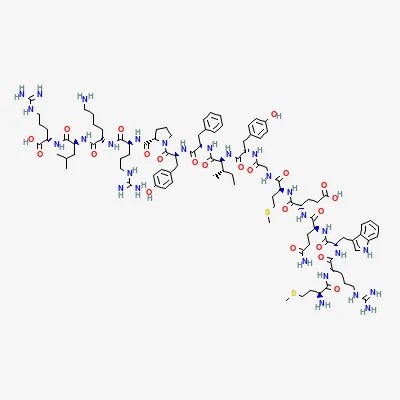
Sequence: MRWQEMGYIF YPRKLR
No modifications; free N-terminal amine and free C-terminal carboxylic acid (H-MRWQEMGYIFYPRKLR-OH).
What Is MOTS-c?
MOTS-c is a 16-amino-acid peptide encoded within the mitochondrial genome rather than the nuclear genome. Its name stands for mitochondrial open reading frame of the 12S rRNA type-c, reflecting its origin in a short open reading frame inside the mitochondrial 12S ribosomal RNA gene[1].
MOTS-c belongs to a small family called mitochondrial-derived peptides (MDPs). Humanin was the first member described, and the discovery of MOTS-c added to evidence that mitochondrial DNA encodes more than its 37 canonical genes[2]. Other reported MDPs include the 16S rRNA-encoded small humanin-like peptides (SHLP1-6) and SHMOOSE[3].
In the original report, the primary target organ of MOTS-c appeared to be skeletal muscle[1]. Reviews note that the peptide is detected in multiple tissues and in plasma, and that circulating levels decline with age in the studies summarized[4]. Most of the published work is preclinical, using cultured cells and rodent models.
Chemical Structure and Molecular Identity
MOTS-c is a linear, unmodified 16-residue peptide with the sequence MRWQEMGYIFYPRKLR and the molecular formula C101H152N28O22S2. PubChem lists a molecular weight of 2174.6 g/mol under CID 146675088 and CAS number 1627580-64-6.
The PubChem record describes the peptide with a free N-terminal amine and a free C-terminal carboxylic acid (H-MRWQEMGYIFYPRKLR-OH). The two sulfur atoms in the formula come from its two methionine residues, at positions 1 and 6. The sequence carries three arginines and one lysine against a single glutamate, so the peptide is strongly basic overall.
- Length: 16 amino acids, all standard L-residues
- Aromatic residues: one tryptophan, one phenylalanine, two tyrosines
- Charged residues: Arg2, Glu5, Arg13, Lys14, Arg16
A naturally occurring human variant, K14Q MOTS-c, replaces the lysine at position 14 with glutamine. In biochemical work this variant showed reduced binding to the kinase CK2 and did not activate it[5], which makes position 14 one of the few residues with a reported functional role.
Research History and Development
MOTS-c was first described in 2015 by Lee and colleagues, and research has since moved from metabolic physiology into aging, muscle, and disease models. The 2015 paper in Cell Metabolism identified the open reading frame in mitochondrial 12S rRNA and reported effects on insulin sensitivity and obesity in mice[1].
A 2016 review from the same group framed MOTS-c and humanin as examples of mitochondrial-encoded signals that act at the cellular and organismal level, sometimes called mitochondrial hormones[2]. In 2018, the group reported that MOTS-c moves into the nucleus under metabolic stress and regulates nuclear gene expression[6]. A 2021 study in Nature Communications linked MOTS-c to exercise and age-related physical decline in mice, with supporting human exercise data[7].
From 2022 onward, studies extended MOTS-c into gestational diabetes[8], hepatitis B virus infection[9], ovarian cancer[10], lung ischemia-reperfusion injury[11], and muscle mitochondrial bioenergetics[12]. A 2024 study identified the kinase CK2 as a direct binding target[5]. No development code or approved clinical product has emerged; a 2023 review noted that no effective method of applying MOTS-c in the clinic had been developed[4].
Mechanisms Studied in Research
The best-characterized mechanism is inhibition of the folate cycle, which leads to activation of AMPK, the cell’s main energy-sensing kinase. In the 2015 report, MOTS-c inhibited the folate cycle and its tethered de novo purine biosynthesis, resulting in AMPK activation[1]. Later reviews describe this as the folate-AICAR-AMPK pathway, in which accumulation of the purine intermediate AICAR drives AMPK signaling[13][14].
Nuclear translocation and gene regulation
Under metabolic stress such as glucose restriction, MOTS-c translocated to the nucleus in an AMPK-dependent manner, regulated genes containing antioxidant response elements, and interacted with the stress-responsive transcription factor NRF2[6]. In rat lung ischemia-reperfusion models, nuclear entry in endothelial cells depended on the motor protein MYH9, whose phosphorylation by CK2 enabled MOTS-c transport; sequencing showed MOTS-c at promoters of antioxidant genes such as HMOX1 and NQO1[11].
Other reported targets
| Target or pathway | Model | Reported effect |
|---|---|---|
| CK2 kinase | Cell-free systems, mice | Direct binding; CK2 activated in muscle but suppressed in fat[5] |
| PGC-1α and AMPK | Two transgenic mouse strains | Improved muscle mitochondrial bioenergetics and lower mitochondrial ROS emission, without change in respiratory protein content[12] |
| MYH9-actin and MAVS | HBV-infected mice and cells | Mitochondrial biogenesis and enhanced antiviral signaling[9] |
| GLUT4, STAT3, IL-10 | Review of multiple studies | Gene regulation linked to metabolic and immune effects[14] |
Reviews also report that MOTS-c expression rises in response to stress and exercise[13], which has led some authors to discuss it as a candidate exercise mimetic[15].
Key Findings From Published Studies
Published findings are dominated by mouse and cell studies showing metabolic and muscle effects, with human data limited to observational biomarker, genetic, and exercise measurements. No controlled trial of administered MOTS-c in humans appears in the literature summarized here.
Metabolism and insulin sensitivity (animal)
In mice, MOTS-c treatment prevented age-dependent and high-fat-diet-induced insulin resistance as well as diet-induced obesity[1]. In a gestational diabetes mouse model induced by a short-term high-fat diet plus streptozotocin, MOTS-c given during pregnancy alleviated hyperglycemia, improved insulin sensitivity and glucose tolerance, reduced diabetes-related birth weight increases and offspring deaths, and protected pancreatic beta cells; it also raised glucose uptake in vitro[8].
Muscle and physical capacity
MOTS-c enhanced physical performance in young (2-month), middle-aged (12-month), and old (22-month) mice, and treatment initiated late in life (23.5 months) increased physical capacity and healthspan[7]. In mice, MOTS-c prevented skeletal muscle atrophy and enhanced muscle glucose uptake, effects that were blunted when CK2 activity was suppressed[5].
In humans, exercise induced endogenous MOTS-c expression in skeletal muscle and in circulation[7]. A 2026 study found that interstitial MOTS-c rose during one-legged knee-extensor exercise but with no arterio-venous difference, suggesting skeletal muscle may not be the source of circulating MOTS-c[12]. In genetic association data, male carriers of the K14Q variant showed a higher risk of sarcopenia and type 2 diabetes in an age- and activity-dependent manner, while female carriers showed an age-specific reduced type 2 diabetes risk[5].
Other disease models
- Hepatitis B: in a cohort of 85 healthy subjects and 404 patients with HBV infection, MOTS-c levels correlated negatively with HBV DNA (R = −0.71); in mice and cells, MOTS-c inhibited HBV replication by 50–70% without notable toxicity[9].
- Ovarian cancer: MOTS-c levels were lower in serum and tumor tissue from patients and associated with poor prognosis; exogenous MOTS-c inhibited proliferation, migration, and invasion of ovarian cancer cells and showed anti-tumor effects in vivo without systemic toxicity[10].
- Lung injury: in rats, exogenous MOTS-c reduced oxidative damage, inflammation, and mortality after lung ischemia-reperfusion; in patients, the rise in serum MOTS-c within 24 hours after cardiopulmonary bypass predicted ARDS, with a combined model reaching an AUC of 0.885[11].
- Bone: a review reports that MOTS-c promotes osteoblast proliferation, differentiation, and mineralization and inhibits osteoclast formation in experimental studies[16].
Nearly all of the interventional findings above come from exogenous synthetic MOTS-c rather than measurements of the endogenous peptide.
Because most MOTS-c findings rely on synthetic peptide, researchers typically confirm sequence identity and purity with HPLC and mass-spectrometry certificates of analysis.
Because most MOTS-c findings rely on synthetic peptide, researchers typically confirm sequence identity and purity with HPLC and mass-spectrometry certificates of analysis.
Regulatory and Research Status
MOTS-c is not an FDA-approved drug and remains an investigational research compound. A 2026 narrative review in Sports Medicine listed MOTS-c among unapproved peptides marketed directly to patients outside regulatory oversight, and noted that rigorous human safety data for such peptides are scarce[17].
The evidence base consists of in-vitro experiments, rodent studies, human observational measurements, and narrative reviews. Reviews published in 2023 describe its potential relevance to diabetes, obesity, aging, cardiovascular disease, and inflammation while noting that clinical application has not been established[4][3]. The same Sports Medicine review cautions that favorable outcomes in animal models do not establish safety or efficacy in people[17].
For researchers, the open questions include the source of circulating MOTS-c, how tissue-specific signaling through CK2 is controlled, and whether observational associations in human cohorts reflect a causal role.
Commonly Supplied Research Formats
MOTS-c is listed by 11 of the 11 major U.S. research-peptide suppliers we track. The most commonly listed formats are:
- 10mg
- 40mg
- 20mg
- 12mg
- 30mg
- 5mg
Supplier catalog survey, October 2026. Quantities refer to net peptide per vial as labeled.
Frequently Asked Questions
What is MOTS-c?
MOTS-c is a 16-amino-acid peptide encoded in mitochondrial DNA, specifically in a short open reading frame of the 12S rRNA gene. It was first reported in 2015 and belongs to the mitochondrial-derived peptide family. Research has focused on its role in insulin sensitivity, skeletal muscle metabolism, and AMPK signaling, mostly in cell and mouse models.
What is the molecular weight of MOTS-c?
MOTS-c has a molecular weight of 2174.6 g/mol according to PubChem (CID 146675088). Its molecular formula is C101H152N28O22S2, and its CAS number is 1627580-64-6. The two sulfur atoms come from the methionine residues at positions 1 and 6 of the sequence MRWQEMGYIFYPRKLR.
Is MOTS-c FDA approved?
No. MOTS-c is not an FDA-approved drug. A 2026 review in Sports Medicine classified it among unapproved peptides marketed outside regulatory oversight and noted that rigorous human safety data are scarce. A 2023 review also stated that no effective clinical method of applying MOTS-c had been developed. It remains an investigational research compound.
How is MOTS-c different from humanin?
Both are mitochondrial-derived peptides, but they come from different mitochondrial genes. Humanin is encoded in the 16S rRNA region, while MOTS-c is encoded in the 12S rRNA region. Humanin was described first; MOTS-c was reported in 2015. MOTS-c research has centered on metabolism, AMPK activation, and skeletal muscle, with skeletal muscle identified as its apparent primary target organ.
How is MOTS-c related to AMPK and AICAR?
MOTS-c inhibits the folate cycle and the de novo purine synthesis pathway tied to it, which leads to accumulation of the intermediate AICAR and activation of AMPK. Reviews call this the folate-AICAR-AMPK pathway. AMPK activation is considered the main route for the metabolic effects reported in mouse studies, and AMPK is also required for MOTS-c nuclear translocation under stress.
Does exercise increase MOTS-c levels?
Yes, according to a 2021 study, exercise induced endogenous MOTS-c expression in human skeletal muscle and in circulation. A 2026 study found that interstitial MOTS-c increased during one-legged exercise but saw no arterio-venous difference across the working leg, suggesting that skeletal muscle may not be the source of the MOTS-c that appears in the blood.
What does the research on MOTS-c show?
In mice, MOTS-c prevented diet-induced obesity and insulin resistance, improved physical performance across age groups, and prevented muscle atrophy. It has also shown effects in mouse or cell models of gestational diabetes, hepatitis B, ovarian cancer, and lung injury. Human data are observational, including biomarker studies and genetic association data for the K14Q variant.
References
- Lee C, Zeng J, Drew BG, et al. The mitochondrial-derived peptide MOTS-c promotes metabolic homeostasis and reduces obesity and insulin resistance. Cell metabolism 2015. PMID 25738459 · DOI
- Lee C, Kim KH, Cohen P. MOTS-c: A novel mitochondrial-derived peptide regulating muscle and fat metabolism. Free radical biology & medicine 2016. PMID 27216708 · DOI
- Kong BS, Lee C, Cho YM. Mitochondrial-Encoded Peptide MOTS-c, Diabetes, and Aging-Related Diseases. Diabetes & metabolism journal 2023. PMID 36824008 · DOI
- Zheng Y, Wei Z, Wang T. MOTS-c: A promising mitochondrial-derived peptide for therapeutic exploitation. Frontiers in endocrinology 2023. PMID 36761202 · DOI
- Kumagai H, Kim SJ, Miller B, et al. MOTS-c modulates skeletal muscle function by directly binding and activating CK2. iScience 2024. PMID 39559755 · DOI
- Kim KH, Son JM, Benayoun BA, et al. The Mitochondrial-Encoded Peptide MOTS-c Translocates to the Nucleus to Regulate Nuclear Gene Expression in Response to Metabolic Stress. Cell metabolism 2018. PMID 29983246 · DOI
- Reynolds JC, Lai RW, Woodhead JST, et al. MOTS-c is an exercise-induced mitochondrial-encoded regulator of age-dependent physical decline and muscle homeostasis. Nature communications 2021. PMID 33473109 · DOI
- Yin Y, Pan Y, He J, et al. The mitochondrial-derived peptide MOTS-c relieves hyperglycemia and insulin resistance in gestational diabetes mellitus. Pharmacological research 2022. PMID 34798268 · DOI
- Lin C, Luo L, Xun Z, et al. Novel function of MOTS-c in mitochondrial remodelling contributes to its antiviral role during HBV infection. Gut 2024. PMID 37788894 · DOI
- Yin Y, Li Y, Ma B, et al. Mitochondrial-Derived Peptide MOTS-c Suppresses Ovarian Cancer Progression by Attenuating USP7-Mediated LARS1 Deubiquitination. Advanced science (Weinheim, Baden-Wurttemberg, Germany) 2024. PMID 39321430 · DOI
- Li X, Zhan F, Qiu G, et al. MOTS-c attenuates lung ischemia-reperfusion injury via MYH9-Dependent nuclear translocation and transcriptional activation of antioxidant genes. Redox biology 2025. PMID 40403491 · DOI
- Gudiksen A, Hansen CC, van der Stede T, et al. MOTS-c improves intrinsic muscle mitochondrial bioenergetic health and efficiency in a PGC-1α/AMPK-dependent manner. Free radical biology & medicine 2026. PMID 41520850 · DOI
- Wan W, Zhang L, Lin Y, et al. Mitochondria-derived peptide MOTS-c: effects and mechanisms related to stress, metabolism and aging. Journal of translational medicine 2023. PMID 36670507 · DOI
- Gao Y, Wei X, Wei P, et al. MOTS-c Functionally Prevents Metabolic Disorders. Metabolites 2023. PMID 36677050 · DOI
- Zhang Z, Chen D, Du K, et al. MOTS-c: A potential anti-pulmonary fibrosis factor derived by mitochondria. Mitochondrion 2023. PMID 37307934 · DOI
- Yi X, Hu G, Yang Y, et al. Role of MOTS-c in the regulation of bone metabolism. Frontiers in physiology 2023. PMID 37200834 · DOI
- Mendias CL, Awan TM. Safety and Efficacy of Approved and Unapproved Peptide Therapies for Musculoskeletal Injuries and Athletic Performance. Sports medicine (Auckland, N.Z.) 2026. PMID 41966639 · DOI
This profile summarizes chemical data and peer-reviewed literature for educational and laboratory-research reference. It is not medical advice, and nothing here describes or recommends use in humans or animals. How we source and verify data.