ARA-290 (Cibinetide)
Also known as: Cibinetide · Helix B surface peptide
ARA-290 (cibinetide) is an 11-amino-acid synthetic peptide derived from the helix B region of erythropoietin that does not stimulate red blood cell production. It is studied as a selective agonist of the innate repair receptor, a complex of the erythropoietin receptor and the beta-common receptor (CD131). It has been tested in phase 2 trials for neuropathy but is not FDA approved.
Last reviewed · Identity data matched to PubChem · 8 peer-reviewed sources
Key facts
- Class: non-erythropoietic erythropoietin-derived tissue-protective peptide
- Length: 11 residues; N-terminal pyroglutamic acid, free C-terminal acid
- Formula C51H84N16O21; molecular weight 1257.3 g/mol; CAS 1208243-50-8
- Nonproprietary name cibinetide; also called pyroglutamate helix B surface peptide (pHBSP)
- Target: innate repair receptor (EPOR/CD131 heteromer)
- Evidence: cell and animal studies plus phase 2 trials in sarcoidosis neuropathy
- Regulatory status: investigational; not FDA approved
Chemical Identity
| Molecular formula | C51H84N16O21 |
|---|---|
| Molecular weight | 1257.3 g/mol |
| Monoisotopic mass | 1256.5997 Da |
| CAS number | 1208243-50-8 |
| PubChem CID | 91810664 |
| UNII | 9W5677JKDA |
| InChIKey | WZTIQQBMSJTRBR-WYKNNRPVSA-N |
| Compound type | Peptide |
| H-bond donors / acceptors | 20 / 22 |
| XLogP3 | -7.7 |
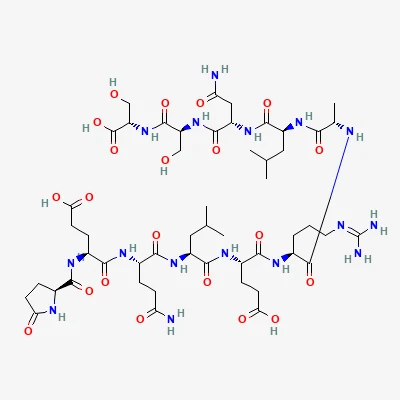
Structure notes: N-terminal pyroglutamic acid (pGlu, a cyclized glutamine/glutamate) followed by Glu-Gln-Leu-Glu-Arg-Ala-Leu-Asn-Ser-Ser; free C-terminal carboxylic acid (pGlu-EQLERALNSS-OH). Sequence field left null because pGlu is a non-standard residue.
What Is ARA-290?
ARA-290, also known by the nonproprietary name cibinetide, is an 11-amino-acid peptide whose sequence comes from the cardioprotective domain of erythropoietin (EPO) [1]. Unlike EPO, it does not stimulate erythropoiesis, and it is studied for tissue-protective and anti-inflammatory effects [2].
The rationale for ARA-290 comes from EPO’s dual roles. EPO protects nerve tissue, but side effects of long-term use limit its clinical application, which led researchers to develop EPO derivatives with fewer side effects [3]. Among these derivatives, ARA-290 has shown significant protective effects on the nervous system [3]. In kidney transplantation, for example, high-dose EPO did not improve short-term outcomes and raised the risk of thrombotic events, whereas ARA-290 is described as a non-erythropoietic derivative that does not increase the risk of cardiovascular events [4].
ARA-290 has been studied in phase 2 clinical trials in small fiber neuropathy associated with sarcoidosis [2] and in animal models of colitis [5], stroke [6], kidney injury [4], cardiac aging [1], and periodontal inflammation [7].
Chemical Structure and Molecular Identity
ARA-290 is a linear 11-residue peptide with an N-terminal pyroglutamic acid and a free C-terminal carboxylic acid. PubChem (CID 91810664) lists its molecular formula as C51H84N16O21, its molecular weight as 1257.3 g/mol, and its CAS number as 1208243-50-8.
The full sequence is pyroglutamyl-Glu-Gln-Leu-Glu-Arg-Ala-Leu-Asn-Ser-Ser. Pyroglutamic acid forms when an N-terminal glutamine or glutamic acid cyclizes into a lactam ring, which removes the free N-terminal amine. Because pyroglutamate is not one of the 20 standard amino acids, the sequence is usually written as pGlu-EQLERALNSS.
| Feature | Detail |
|---|---|
| Length | 11 residues |
| N-terminus | Pyroglutamic acid (cyclized, no free amine) |
| C-terminus | Serine, free carboxylic acid |
| Acidic residues | Two glutamic acids (positions 2 and 5) |
| Basic residue | One arginine (position 6) |
| Synonyms | Cibinetide, ARA290, pHBSP |
A known limitation of ARA-290 is its short half-life. To address this, researchers created a thioether-cyclized helix B peptide (CHBP), a modified analog designed to be more stable [3].
Research History and Development
ARA-290 emerged from efforts to separate EPO’s tissue-protective activity from its blood-forming activity. Researchers sought EPO derivatives with fewer side effects, and ARA-290 showed significant protective effects on the nervous system [3].
Early translational work included a 2013 pig study of renal ischemia/reperfusion injury, motivated by the failure of high-dose EPO to improve outcomes after kidney transplantation [4]. Its authors reported improved renal function and less structural damage, which they said warranted further investigation toward clinical application [4]. Clinical development then focused on painful small fiber neuropathy: by 2014, two phase 2 trials had been reported in patients with sarcoidosis [2].
More recent studies have examined ARA-290 in cerebral ischemic stroke in mice [6], age-related cardiac decline in rats [1], and apical periodontitis in mice [7]. It has also been used as a reference CD131 agonist in cell-based mechanistic experiments on other EPO receptor modulators [8].
Mechanisms Studied in Research
ARA-290 is studied as a selective agonist of the innate repair receptor (IRR), a heteromer of the EPO receptor and the beta-common receptor (CD131), rather than the EPO receptor homodimer that drives red blood cell production [5].
Two EPO receptor forms
EPO receptor homodimers signal to mature erythroid progenitor cells, while in other cell types, including immune cells, the EPO receptor pairs with CD131 to form the IRR and exerts tissue-protective effects [5]. Selective IRR activation is the basis for ARA-290’s non-erythropoietic profile.
Anti-inflammatory signaling
- In LPS-activated primary macrophages, the anti-inflammatory effects of cibinetide depended on CD131 and JAK2 and were mediated by inhibition of NF-kappaB subunit p65 activity [5]. In colitic mice, cibinetide reduced production of cytokines, chemokines, and nitric oxide synthase-2 [5].
- In a mouse stroke model, ARA-290’s neuroprotective effect was significantly suppressed by siRNA against the beta-common receptor [6].
- Untreated apical periodontitis lesions in mice showed a 50% reduction in SIRT1 and a 5-fold increase in acetylated NF-kappaB p65 and IL-1beta. In both in vivo and in vitro periodontitis models, ARA-290 raised SIRT1 expression by about 40% and lowered acetylated NF-kappaB p65 by about 75% and IL-1beta by about 62.5%; inhibiting the SIRT1 pathway was used to test this mechanism [7].
- In H9c2 cardiomyocytes, adding ARA-290 as a CD131 agonist reversed the anti-hypertrophic effects of pegmolesatide in rescue experiments [8].
Key Findings From Published Studies
Published findings for ARA-290 come mostly from animal models, with human data limited to phase 2 trials in sarcoidosis-associated neuropathy.
Human trials
A 2014 review of two phase 2 trials in sarcoidosis patients with small fiber neuropathy reported that ARA-290 was consistently associated with significant improvement in neuropathic pain scores on validated questionnaires [2]. The trials also reported increases in corneal nerve fibers, improved sensory pain thresholds, and better quality of life and physical functioning, and the review authors described the safety profile as excellent [2].
Animal studies
- Colitis (mouse): in dextran sulphate sodium-induced colitis in C57BL/6N mice, cibinetide given after colitis was established improved weight gain and survival, preserved tissue integrity, and reduced myeloid cell infiltration and pro-inflammatory mediators [5].
- Stroke (mouse): after middle cerebral artery occlusion, ARA-290 produced neuroprotection qualitatively similar to EPO, reduced neuronal apoptosis and brain inflammatory cytokines, and did not cause erythropoiesis [6].
- Kidney injury (pig): in eight female Dutch Landrace pigs with unilateral renal ischemia, ARA-290 increased glomerular filtration rate over seven days, tended to reduce MCP-1 and IL-6 shortly after reperfusion, and reduced interstitial fibrosis [4].
- Cardiac aging (rat): in a 15-month randomized study in aged Fischer 344 x Brown Norway rats, chronic ARA-290 treatment mitigated age-related increases in the cardiac non-myocyte to myocyte ratio, infiltrating leukocytes and monocytes, pro-inflammatory cytokines, and total and phosphorylated NF-kappaB, and enhanced cardiomyocyte autophagy flux [1]. The study tracked heart function by serial echocardiography from 18 to 33 months of age [1].
- Apical periodontitis (mouse): ARA-290 reduced inflammatory infiltration, osteoclast numbers, and periapical bone loss [7].
Limits of the evidence
The human data summarized here come from a review of two phase 2 trials in a single condition, sarcoid neuropathy, rather than from large confirmatory trials [2]. Several animal studies were small; the kidney study, for instance, used eight pigs [4]. Findings across models point in a consistent anti-inflammatory direction, but they have not been tested in phase 3 trials, and the peptide’s short half-life remains a practical constraint for research design [3].
Because ARA-290 carries a non-standard N-terminal pyroglutamate, researchers typically confirm its identity with HPLC and mass-spectrometry certificates of analysis.
Regulatory and Research Status
ARA-290 (cibinetide) is an investigational peptide and is not approved by the US Food and Drug Administration for any indication. Its clinical evidence consists of phase 2 trials in sarcoidosis-associated small fiber neuropathy [2].
Reviewers have noted that its short half-life limits its application, which has driven work on stabilized analogs such as CHBP [3]. The authors of the sarcoidosis review called for additional studies on whether ARA-290 has disease-modifying properties [2].
In the laboratory, ARA-290 remains a tool for studying the innate repair receptor and CD131 signaling in inflammation, nerve injury, and organ protection [5][8].
Commonly Supplied Research Formats
ARA-290 is listed by 10 of the 11 major U.S. research-peptide suppliers we track. The most commonly listed formats are:
- 16mg
- 10mg
Supplier catalog survey, October 2026. Quantities refer to net peptide per vial as labeled.
Frequently Asked Questions
Is ARA-290 the same as cibinetide?
Yes. Cibinetide is the nonproprietary name for ARA-290. The peptide is also called ARA290 and pyroglutamate helix B surface peptide (pHBSP). All of these names refer to the same 11-residue peptide, pGlu-EQLERALNSS, with the formula C51H84N16O21 and a molecular weight of 1257.3 g/mol. Research papers use the code name and the nonproprietary name interchangeably.
What is the molecular weight of ARA-290?
ARA-290 has a molecular weight of 1257.3 g/mol and the molecular formula C51H84N16O21, according to PubChem (CID 91810664). Its CAS number is 1208243-50-8. The peptide has 11 residues, starting with pyroglutamic acid and ending in serine with a free C-terminal carboxylic acid. These values describe the free peptide, not a salt form.
How is ARA-290 different from erythropoietin?
ARA-290 is a short 11-residue peptide taken from the cardioprotective helix B region of erythropoietin, while EPO is a full glycoprotein hormone. EPO activates the EPO receptor homodimer that drives red blood cell production. ARA-290 is studied as a selective agonist of the innate repair receptor, the EPO receptor paired with CD131, and does not stimulate erythropoiesis.
Is ARA-290 FDA approved?
No. ARA-290 (cibinetide) is not approved by the FDA for any use. It remains an investigational compound. Its clinical evidence comes from phase 2 trials in patients with small fiber neuropathy associated with sarcoidosis, and most other published data come from animal and cell studies of inflammation, nerve injury, and organ protection.
What does the research on ARA-290 show?
In phase 2 trials in sarcoidosis-associated small fiber neuropathy, ARA-290 was associated with lower neuropathic pain scores and increased corneal nerve fibers. Animal studies reported reduced inflammation and tissue damage in mouse colitis, mouse stroke, pig kidney ischemia, rat cardiac aging, and mouse apical periodontitis models. Many of these effects depended on CD131 and NF-kappaB signaling.
Why does ARA-290 have a pyroglutamate at its N-terminus?
The first residue of ARA-290 is pyroglutamic acid, a cyclized form of glutamine or glutamic acid that forms a lactam ring. This modification removes the free N-terminal amine. Because pyroglutamate is non-standard, the sequence is written as pGlu-EQLERALNSS. The PubChem formula C51H84N16O21 accounts for this cyclized residue.
References
- Winicki NM, Nanavati AP, Morrell CH, et al. A small erythropoietin derived non-hematopoietic peptide reduces cardiac inflammation, attenuates age associated declines in heart function and prolongs healthspan. Frontiers in cardiovascular medicine 2022. PMID 36741836 · DOI
- van Velzen M, Heij L, Niesters M, et al. ARA 290 for treatment of small fiber neuropathy in sarcoidosis. Expert opinion on investigational drugs 2014. PMID 24555851 · DOI
- Liu G, Liang J, Li W, et al. The protective effect of erythropoietin and its novel derived peptides in peripheral nerve injury. International immunopharmacology 2024. PMID 38943972 · DOI
- van Rijt WG, Nieuwenhuijs-Moeke GJ, van Goor H, et al. ARA290, a non-erythropoietic EPO derivative, attenuates renal ischemia/reperfusion injury. Journal of translational medicine 2013. PMID 23302512 · DOI
- Nairz M, Haschka D, Dichtl S, et al. Cibinetide dampens innate immune cell functions thus ameliorating the course of experimental colitis. Scientific reports 2017. PMID 29026145 · DOI
- Wang RL, Yang ZH, Huang YY, et al. Erythropoietin-derived peptide ARA290 mediates brain tissue protection through the β-common receptor in mice with cerebral ischemic stroke. CNS neuroscience & therapeutics 2024. PMID 38488446 · DOI
- Wang Y, Tang Y, Wang M, et al. ARA290 Attenuates Apical Periodontitis via SIRT1/NF-κB/IL-1β Pathway Modulation. International dental journal 2025. PMID 40680515 · DOI
- Zhang X, Li S, Lin T, et al. Pegmolesatide ameliorates indoxyl sulfate-induced cardiomyocyte hypertrophy through modulating the EPOR-CD131-dependent JAK2/STAT3 signaling pathway. International immunopharmacology 2025. PMID 41092772 · DOI
Related Compounds
This profile summarizes chemical data and peer-reviewed literature for educational and laboratory-research reference. It is not medical advice, and nothing here describes or recommends use in humans or animals. How we source and verify data.