KPV (Lys-Pro-Val)
Also known as: α-MSH (11-13) · Lys-Pro-Val
KPV is a tripeptide, lysine-proline-valine, that corresponds to residues 11 to 13 at the C-terminal end of alpha-melanocyte-stimulating hormone (alpha-MSH). It is studied for anti-inflammatory activity, mainly in cell culture and in mouse and rat models of colitis, where it is taken up by the PepT1 transporter and inhibits NF-kB signaling. It is not FDA approved.
Last reviewed · Identity data matched to PubChem · 13 peer-reviewed sources
Key facts
- Class: melanocortin-derived anti-inflammatory tripeptide
- Sequence: Lys-Pro-Val (KPV), alpha-MSH residues 11-13
- Formula C16H30N4O4; molecular weight 342.43 g/mol (PubChem CID 125672)
- CAS number 67727-97-3
- Taken into cells by the di/tripeptide transporter PepT1
- Evidence from cell culture and rodent colitis models; no published human trials found
- Not approved by the US FDA for any use
Chemical Identity
| Molecular formula | C16H30N4O4 |
|---|---|
| Molecular weight | 342.43 g/mol |
| Monoisotopic mass | 342.2267 Da |
| CAS number | 67727-97-3 |
| PubChem CID | 125672 |
| InChIKey | YSPZCHGIWAQVKQ-AVGNSLFASA-N |
| Length | 3 amino acids |
| Compound type | Peptide |
| H-bond donors / acceptors | 4 / 6 |
| XLogP3 | -3.5 |
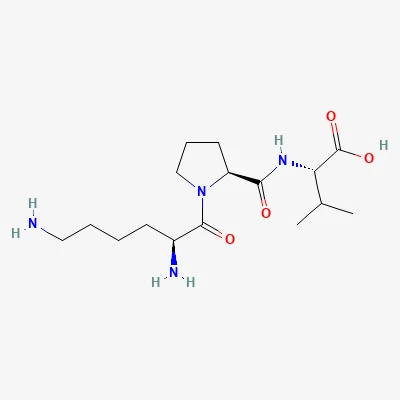
Sequence: KPV
Unmodified termini: free N-terminal amine and free C-terminal carboxylic acid (H-Lys-Pro-Val-OH). Sequence matches the PubChem formula C16H30N4O4.
What Is KPV?
KPV is a three-amino-acid peptide, Lys-Pro-Val, that matches the C-terminal end (residues 11 to 13) of the hormone alpha-MSH and is studied for anti-inflammatory activity. Researchers describe alpha-MSH and certain fragments, including KPV, as modulators of inflammation.[1]
KPV is one of the carboxyl-terminal tripeptides of alpha-MSH, together with its D-valine analog KP-D-V, that have been reported as the smallest minimal sequences able to prevent inflammation.[2] Later papers describe it as a naturally occurring or endogenous tripeptide derived from alpha-MSH.[3][4]
Most published KPV research concerns intestinal inflammation. Studies in mouse and rat colitis models, and in human intestinal and immune cell lines, form the core of the literature, with newer work on drug-delivery hydrogels and nanoparticles that carry KPV to inflamed tissue.[5][6]
Chemical Structure and Molecular Identity
KPV is the linear tripeptide L-lysyl-L-prolyl-L-valine, with a free amino terminus and a free carboxylic acid terminus. PubChem lists it under CID 125672 with the molecular formula C16H30N4O4 and a molecular weight of 342.43 g/mol. Its CAS number is 67727-97-3, and synonyms include alpha-MSH (11-13) and ACTH (11-13).
The three residues give KPV a simple chemical profile:
- Lysine (K): a basic side chain that carries a positive charge at physiological pH
- Proline (P): a cyclic residue that restricts backbone flexibility
- Valine (V): a branched hydrophobic residue at the C-terminus
At neutral pH the free tripeptide carries a net charge of about +1: the lysine side chain and N-terminal amine are protonated, offset by the C-terminal carboxylate.
Because the same sequence also forms residues 11 to 13 of adrenocorticotropic hormone (ACTH), the fragment is sometimes labeled ACTH (11-13). Its small size makes it a substrate for PepT1, the intestinal di- and tripeptide transporter.[5]
KPV in solution is unstable under some experimental conditions. A 2021 rat study reported that KPV in solution was very unstable after delivery to the colon, which motivated hydrogel formulations designed to protect it.[7]
Research History and Development
KPV emerged from research on the anti-inflammatory hormone alpha-MSH and was later developed as a stand-alone tripeptide for intestinal inflammation research. By 2000, reviews described alpha-MSH as an ancient neuroimmunomodulatory peptide and noted that KPV shared its ability to modulate inflammation.[1]
Early host-defense work found that alpha-MSH and KPV inhibited the bacterium Staphylococcus aureus and the yeast Candida albicans in antimicrobial tests.[8] A 2004 study then examined how KPV signals in human keratinocytes, asking whether these minimal sequences act through MC1R or through cyclic AMP, the pathway credited with alpha-MSH’s anti-inflammatory effects.[2]
In 2008, two studies established KPV in colitis research. One showed that KPV enters intestinal epithelial and immune cells through PepT1,[5] and the other found anti-inflammatory effects in two mouse colitis models, including in mice lacking a functional melanocortin-1 receptor.[6]
Since 2017, work has focused on delivery systems: hyaluronic acid-functionalized nanoparticles, mucoadhesive hydrogels and PepT1-targeted nanoparticles.[3][9][10] Reviews in 2025 listed KPV among host-defense peptides of interest for inflammatory bowel disease and among tripeptides studied in wound healing.[11][12]
Mechanisms Studied in Research
The best-documented mechanism is PepT1-mediated uptake of KPV into cells followed by inhibition of NF-kB and MAP kinase inflammatory signaling. In human intestinal epithelial cells (Caco2-BBE and HT29-Cl.19A) and Jurkat T cells stimulated with proinflammatory cytokines, nanomolar concentrations of KPV reduced NF-kB and MAP kinase activation and lowered proinflammatory cytokine secretion, and uptake depended on PepT1.[5]
Melanocortin receptor role
The parent hormone alpha-MSH acts through melanocortin receptors and inhibits NF-kB by preserving its inhibitor IkB-alpha.[1] KPV’s relationship to these receptors is less clear. In human keratinocytes, neither alpha-MSH nor KPV raised cyclic AMP, but both triggered rapid intracellular calcium signals, and KPV raised calcium in hamster ovary cells engineered to express MC1R.[2] In mice lacking functional MC1R, KPV still protected against colitis, suggesting effects at least partly independent of MC1R.[6]
Oxidative stress and lipid signaling
In HepG2 liver cells exposed to oleic acid, KPV reduced reactive oxygen species, ERK activation, AKT and mTORC1 phosphorylation and fatty acid synthase expression, and altered PPAR-gamma phosphorylation.[4] In a rat colitis study, the effect of a KPV-loaded hydrogel was associated with inhibition of oxidative stress.[9]
Key Findings From Published Studies
KPV has shown anti-inflammatory and tissue-repair effects in rodent colitis and oral mucositis models and in cell culture, but no human clinical trial appears in the indexed literature. Key results by model:
| Model | Reported finding |
|---|---|
| Mouse DSS and TNBS colitis | Reduced colitis incidence and proinflammatory cytokine expression[5] |
| Mouse DSS and CD45RBhi transfer colitis | Faster weight regain, fewer inflammatory infiltrates, lower MPO activity; all MC1R-deficient treated mice survived DSS colitis[6] |
| Mouse ulcerative colitis, hyaluronic acid nanoparticles | Faster mucosal healing and lower TNF-alpha than a non-targeted KPV nanoparticle system[3] |
| Rat TNBS colitis, adhesive hydrogels | Less weight loss and colon shortening, lower MPO, epithelial barrier recovery and more beneficial gut bacteria[7][9] |
| Rat chemotherapy-induced oral mucositis | Better food intake and weight recovery, tissue repair, lower IL-1beta and TNF-alpha[13] |
Colitis models
In mouse DSS and transfer colitis models, KPV treatment led to recovery and reduced histological inflammation.[6] In a mouse model of acute severe ulcerative colitis, KPV served as a PepT1-targeting ligand on cyclosporine A nanoparticles; notably, the nanoparticles without cyclosporine A also showed marked therapeutic effects.[10] In the 2017 hyaluronic acid study, the roughly 272 nm nanoparticles delivered KPV to colonic epithelial cells and macrophages and appeared nontoxic and biocompatible with intestinal cells.[3] A 2022 double-network hydrogel carried a negative charge that let it adhere specifically to inflamed rather than healthy colonic mucosa in rats, and it helped KPV retain bioactivity longer under high-temperature conditions.[9]
Antimicrobial and wound-healing data
KPV inhibited Staphylococcus aureus and Candida albicans in early in-vitro tests.[8] A KPV hydrogel for oral mucositis showed strong antibacterial activity against S. aureus and preserved KPV’s anti-inflammatory and cell-migration activity. In rats, the treated ulcerated gingiva showed repair with increased CK10 and PCNA expression.[13] A 2025 review reports that KPV-loaded hydrogels reduced inflammation, promoted tissue regeneration and combated MRSA infections in wound studies.[12]
Liver cell data
In an oleic acid model of hepatocellular steatosis in HepG2 cells, KPV reduced lipid accumulation without cytotoxicity.[4]
Because KPV is a tripeptide that can be confused with analogs such as KP-D-V, researchers verify identity with HPLC and mass spectrometry certificates of analysis.
Regulatory and Research Status
KPV is not approved by the US Food and Drug Administration for any use. It remains a research compound.
All indexed studies are in-vitro experiments or rodent models, plus reviews. Authors of the 2008 colitis studies proposed KPV as a possible new agent for inflammatory bowel disease, and a 2025 review grouped it with other host-defense peptides as candidates for that field, but no human efficacy or safety data were found.[5][11]
Much current work addresses formulation rather than the peptide itself, because KPV’s stability and targeting limit its use in experimental models. Hydrogel and nanoparticle carriers are designed to protect it, keep it at inflamed tissue and deliver it into colonic epithelial cells and macrophages.[7][3] Because many studies tested KPV inside a carrier, their results reflect the combined system rather than the free peptide alone. In one case, KPV-targeted nanoparticles showed therapeutic effects even without their cyclosporine A payload.[10]
Commonly Supplied Research Formats
KPV is listed by 11 of the 11 major U.S. research-peptide suppliers we track. The most commonly listed formats are:
- 10mg
- 5mg
- 250mcg x 60 (capsules)
- 4mg
Supplier catalog survey, October 2026. Quantities refer to net peptide per vial as labeled.
Frequently Asked Questions
What is KPV peptide?
KPV is a tripeptide made of lysine, proline and valine. It corresponds to residues 11 to 13 at the C-terminal end of alpha-melanocyte-stimulating hormone (alpha-MSH). It is studied for anti-inflammatory activity, mainly in human cell lines and in mouse and rat models of colitis, where it is taken up by the PepT1 transporter.
Is KPV the same as alpha-MSH?
No. Alpha-MSH is a 13-amino-acid melanocortin hormone, while KPV is only its last three residues, Lys-Pro-Val. Both have been studied for anti-inflammatory effects, but KPV's colitis effects in mice appear at least partly independent of the melanocortin-1 receptor through which alpha-MSH signals.
What is the molecular weight of KPV?
KPV has a molecular weight of 342.43 g/mol and the molecular formula C16H30N4O4, according to PubChem (CID 125672). Its CAS number is 67727-97-3. It is listed under synonyms including Lys-Pro-Val, L-lysyl-L-prolyl-L-valine, alpha-MSH (11-13) and ACTH (11-13). The value refers to the free peptide; salt forms such as the acetate have a higher formula weight.
Is KPV FDA approved?
No. KPV is not approved by the US FDA for any use. The published literature consists of cell culture studies, rodent models of colitis, oral mucositis and wound healing, and reviews. No human clinical trial of KPV was found in the indexed PubMed literature reviewed for this page.
What does the research on KPV show?
In mouse and rat colitis models, KPV reduced inflammatory cell infiltration, cytokine expression and weight loss, and improved recovery. In human intestinal and T-cell lines, it inhibited NF-kB and MAP kinase signaling after uptake through PepT1. Hydrogel studies reported anti-inflammatory and antibacterial effects in a rat oral mucositis model.
How is KPV different from LL-37?
KPV is a three-residue fragment of alpha-MSH studied mainly for anti-inflammatory effects in the gut. LL-37 is a 37-residue human cathelicidin antimicrobial peptide released from hCAP18 that disrupts microbial membranes. Both appear in host-defense peptide research, but they differ in origin, size and main mechanism.
References
- Ichiyama T, Sato S, Okada K, et al. The neuroimmunomodulatory peptide alpha-MSH. Annals of the New York Academy of Sciences 2000. PMID 11268347 · DOI
- Elliott RJ, Szabo M, Wagner MJ, et al. alpha-Melanocyte-stimulating hormone, MSH 11-13 KPV and adrenocorticotropic hormone signalling in human keratinocyte cells. The Journal of investigative dermatology 2004. PMID 15102092 · DOI
- Xiao B, Xu Z, Viennois E, et al. Orally Targeted Delivery of Tripeptide KPV via Hyaluronic Acid-Functionalized Nanoparticles Efficiently Alleviates Ulcerative Colitis. Molecular therapy : the journal of the American Society of Gene Therapy 2017. PMID 28143741 · DOI
- Lee JY, Lee J, Jung WK, et al. Lysine-proline-valine peptide attenuates hepatic lipid accumulation through ROS-dependent regulation of the PPARγ pathway in HepG2 cells. Cytotechnology 2026. PMID 42064835 · DOI
- Dalmasso G, Charrier-Hisamuddin L, Nguyen HT, et al. PepT1-mediated tripeptide KPV uptake reduces intestinal inflammation. Gastroenterology 2008. PMID 18061177 · DOI
- Kannengiesser K, Maaser C, Heidemann J, et al. Melanocortin-derived tripeptide KPV has anti-inflammatory potential in murine models of inflammatory bowel disease. Inflammatory bowel diseases 2008. PMID 18092346 · DOI
- Sun J, Xue P, Liu J, et al. Self-Cross-Linked Hydrogel of Cysteamine-Grafted γ-Polyglutamic Acid Stabilized Tripeptide KPV for Alleviating TNBS-Induced Ulcerative Colitis in Rats. ACS biomaterials science & engineering 2021. PMID 34547895 · DOI
- Catania A, Cutuli M, Garofalo L, et al. The neuropeptide alpha-MSH in host defense. Annals of the New York Academy of Sciences 2000. PMID 11268348 · DOI
- Zhao Y, Xue P, Lin G, et al. A KPV-binding double-network hydrogel restores gut mucosal barrier in an inflamed colon. Acta biomaterialia 2022. PMID 35245681 · DOI
- Wu Y, Sun M, Wang D, et al. A PepT1 mediated medicinal nano-system for targeted delivery of cyclosporine A to alleviate acute severe ulcerative colitis. Biomaterials science 2019. PMID 31408067 · DOI
- Rodrigues JM, Ferreira Leal AP, Buccini DF, et al. Host defense peptides as a new drug lead to a strategy for inflammatory bowel disease. Drug discovery today 2025. PMID 41241376 · DOI
- Adnan SB, Maarof M, Fauzi MB, et al. Exploring the Role of Tripeptides in Wound Healing and Skin Regeneration: A Comprehensive Review. International journal of medical sciences 2025. PMID 41209547 · DOI
- Shao W, Chen R, Lin G, et al. In situ mucoadhesive hydrogel capturing tripeptide KPV: the anti-inflammatory, antibacterial and repairing effect on chemotherapy-induced oral mucositis. Biomaterials science 2021. PMID 34846053 · DOI
Related Compounds
This profile summarizes chemical data and peer-reviewed literature for educational and laboratory-research reference. It is not medical advice, and nothing here describes or recommends use in humans or animals. How we source and verify data.