Vitamin B12 (Methylcobalamin)
Methylcobalamin (INN mecobalamin) is one of the two coenzyme forms of vitamin B12: a cobalt(III) corrinoid with a methyl group bonded directly to cobalt. Its formula is C63H91CoN13O14P (1344.4 g/mol). It serves as the cofactor for B12-dependent methyltransferases such as methionine synthase and has been studied in randomized trials in peripheral neuropathy and ALS.
Last reviewed · Identity data matched to PubChem · 13 peer-reviewed sources
Key facts
- Class: organometallic cobalt corrinoid; a coenzyme form of vitamin B12; INN mecobalamin
- Structure: methyl group bonded to cobalt(III) as the upper axial ligand of the corrin ring
- Formula C63H91CoN13O14P; molecular weight 1344.4 g/mol; CAS 13422-55-4
- Cofactor for B12-dependent methyltransferases, including methionine synthase
- Light-sensitive: the cobalt-carbon bond is cleaved by light
- Studied in randomized trials in diabetic neuropathy, ALS and chemotherapy-induced hand-foot syndrome
- Regulatory status: not an FDA-approved drug in the US; mecobalamin is a prescription drug in Japan
Chemical Identity
| Molecular formula | C63H91CoN13O14P |
|---|---|
| Molecular weight | 1344.4 g/mol |
| Monoisotopic mass | 1343.5878 Da |
| CAS number | 13422-55-4 |
| PubChem CID | 10898559 |
| InChIKey | ZFLASALABLFSNM-WYVZQNDMSA-L |
| Compound type | Small molecule |
| H-bond donors / acceptors | 9 / 20 |
What Is Methylcobalamin?
Methylcobalamin is one of the two coenzyme forms of vitamin B12, the other being adenosylcobalamin. Cobalamin from food becomes bioavailable through release from dietary protein, intrinsic factor-mediated absorption, transport by haptocorrin or transcobalamin, cellular uptake, and enzymatic conversion into these two cofactor forms[1].
Methylcobalamin, also known by the INN mecobalamin, acts as a cofactor for B12-dependent methyltransferases[2]. It is also one of four vitamin B12 forms used commercially, alongside cyanocobalamin, hydroxocobalamin and 5′-deoxyadenosylcobalamin[3].
Since its discovery, mecobalamin has been applied mainly to hyperhomocysteinemia and peripheral neuropathy[2]. More recent research includes randomized trials in amyotrophic lateral sclerosis (ALS) and in chemotherapy-associated hand-foot syndrome[4][5].
Chemical Structure and Molecular Identity
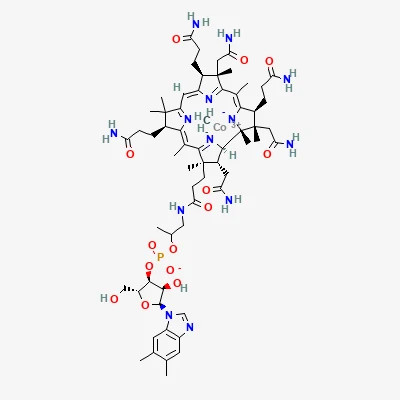
Methylcobalamin is a cobalt(III) corrinoid in which a methyl group is bonded directly to the cobalt atom, making it a naturally occurring organometallic compound. PubChem (CID 10898559) lists the molecular formula C63H91CoN13O14P and a molecular weight of 1344.4 g/mol. The CAS number is 13422-55-4.
The core is the same as in every cobalamin: a corrin macrocycle coordinating cobalt through four nitrogen atoms, with a 5,6-dimethylbenzimidazole nucleotide as the lower axial ligand. The forms differ only in the upper ligand. Methylcobalamin carries a methyl group where cyanocobalamin carries cyanide[3].
Stability and analytical identification
The cobalt-carbon bond is the molecule’s weak point. Light cleaves it, and in the presence of oxygen methylcobalamin is converted to hydroxocobalamin. A 2022 review compared the reactivity of the four commercial B12 forms under temperature, pH and light, and in the presence of oxidants, reductants and other water-soluble vitamins, and evaluated stabilization approaches[3].
For identity and purity, laboratories typically use reversed-phase HPLC with visible-UV detection, often confirmed by mass spectrometry, and handle samples under light protection. Hydroxocobalamin and cyanocobalamin are the main related substances to separate and quantify.
Research History and Development
Methylcobalamin research moved from cofactor biochemistry to clinical studies in homocysteine disorders and neuropathy, and later to randomized trials in ALS. A 2008 review covered its mechanism, pharmacokinetics and metabolism, and its clinical use as monotherapy or combined therapy in hyperhomocysteinemia and peripheral neuropathy[2].
A 1998 monograph argued that methylcobalamin had a theoretical advantage over cyanocobalamin and some metabolic applications not shared by other B12 forms, and listed proposed areas of interest ranging from diabetic neuropathy to sleep disorders[6]. Such claims were largely untested by large controlled trials at the time.
In ALS, a long-term phase II/III randomized controlled study tested ultra-high-dose methylcobalamin against placebo[4]. The ALSUntangled group reviewed the evidence on methylcobalamin in 2015[7], and a later multicenter phase 3 trial in Japan focused specifically on patients enrolled within one year of symptom onset[8].
Mechanisms Studied in Research
The established biochemical role of methylcobalamin is as the methyl-carrying cofactor of B12-dependent methyltransferases; additional neural mechanisms have been proposed from experimental studies. In humans, cobalamin is converted via methionine synthase and methylmalonyl-CoA mutase into its two cofactor forms[1].
Proposed neural mechanisms include:
- Nerve regeneration and neuroprotection: promoting regeneration of injured nerves and antagonizing glutamate-induced neurotoxicity[9].
- Reduced ectopic firing: inhibiting spontaneous ectopic discharges of injured primary sensory neurons[9].
- Ion channel modulation: decreasing excitability in medium-sized dorsal root ganglion neurons and the expression of TRPA1, TRPM8, TRPV1, TRPV4, phosphorylated p38 MAPK and axonal voltage-gated sodium channels[10].
- Immune modulation: effects on T lymphocytes, natural killer cells and cytokines such as TNF-alpha, IL-6 and IL-1beta[10].
A 2020 systematic review summarized the proposed basis for B12 in neuropathic pain as promoting myelination, increasing nerve regeneration and decreasing ectopic nerve firing[11]. A 2013 review added that methylcobalamin alleviated pain behaviors in experimental and clinical studies of diabetic neuropathy, low back pain and neuralgia, and improved nerve conduction[9]. Most of these mechanisms come from animal and cell studies.
Key Findings From Published Studies
Randomized trials of methylcobalamin have produced positive results in some neuropathy and supportive-care settings and mixed results in ALS.
Neuropathy
In a 1-year double-blind trial in 90 adults with type 2 diabetes on long-term metformin, diabetic neuropathy and B12 levels below 400 pmol/L, oral methylcobalamin raised B12 levels and improved vibration perception threshold, sural nerve conduction, pain scores and quality of life compared with placebo, while several measures worsened in the placebo group[12]. A 2008 review reported that mecobalamin monotherapy and combined therapy both lowered plasma or serum homocysteine and improved neuropathic symptoms, with combinations with other B vitamins appearing more effective[2]. A 2025 meta-analysis of seven randomized trials of dapagliflozin combined with methylcobalamin in diabetic peripheral neuropathy reported improved overall effective rate and nerve conduction velocities[13]. A 2020 systematic review of 24 studies found some evidence for B12 in post-herpetic neuralgia (level II) and painful peripheral neuropathy (level III)[11].
Amyotrophic lateral sclerosis
In the phase II/III study of 373 patients, which compared two methylcobalamin dose levels with placebo, neither primary endpoint (time to death or full ventilation support, and change in ALSFRS-R score) differed significantly. Post-hoc analyses of patients enrolled within 12 months of onset showed a longer time to primary events and smaller ALSFRS-R decline, and treatment-related adverse events were similar and low across groups[4].
The follow-up phase 3 trial enrolled patients diagnosed within one year of onset and, after a 12-week observation period, randomized 130 of them to methylcobalamin or placebo for 16 weeks, with change in ALSFRS-R total score as the primary endpoint[8].
Hand-foot syndrome
In a 2025 phase 3 trial in 234 women receiving adjuvant capecitabine for HER2-negative early breast cancer, grade 2 or higher hand-foot syndrome occurred in 14.5% of the oral methylcobalamin group and 29.1% of the placebo group, with no methylcobalamin-specific adverse events[5]. Reduction or discontinuation of capecitabine because of hand-foot syndrome occurred in 7.7% versus 13.7%, a difference whose confidence interval included zero[5].
Because methylcobalamin’s cobalt-carbon bond is light-sensitive, researchers typically confirm identity and purity, including hydroxocobalamin content, with HPLC and mass spectrometry certificates of analysis.
Because methylcobalamin's cobalt-carbon bond is light-sensitive, researchers typically confirm identity and purity, including hydroxocobalamin content, with HPLC and mass spectrometry certificates of analysis.
Regulatory and Research Status
Methylcobalamin is not an FDA-approved drug in the United States, although mecobalamin is approved as a prescription drug in Japan. Cyanocobalamin, not methylcobalamin, is the B12 form used in US-approved prescription products.
Reviewers continue to call for better evidence. The 2008 mecobalamin review concluded that more precise double-blind randomized trials were needed to confirm effects on hyperhomocysteinemia, peripheral neuropathy and cardiovascular, neurological and osteoporotic outcomes[2]. Diagnostic questions also complicate research: serum B12 remains the most common test, but holotranscobalamin, methylmalonic acid and homocysteine are increasingly used, and test limitations can lead to inappropriate treatment decisions[1].
For researchers, open questions include which patient subgroups benefit in ALS and neuropathy, and how stability differences between B12 forms affect product quality[3].
Commonly Supplied Research Formats
Vitamin B12 is listed by 1 of the 11 major U.S. research-peptide suppliers we track. The most commonly listed formats are:
- 1.5mg / 1mL
Supplier catalog survey, October 2026. Quantities refer to net peptide per vial as labeled.
Frequently Asked Questions
Is methylcobalamin the same as mecobalamin?
Yes. Mecobalamin is the International Nonproprietary Name for methylcobalamin. Both refer to the vitamin B12 form in which a methyl group is bonded to the central cobalt atom, with the formula C63H91CoN13O14P and CAS number 13422-55-4. The name mecobalamin is common in clinical literature from Japan and China.
What is the molecular weight of methylcobalamin?
Methylcobalamin has a molecular weight of 1344.4 g/mol according to PubChem (CID 10898559). Its molecular formula is C63H91CoN13O14P. It is slightly lighter than cyanocobalamin (1355.4 g/mol) because a methyl group replaces the cyanide ligand on cobalt, removing one nitrogen and adding three hydrogens.
How is methylcobalamin different from cyanocobalamin?
Methylcobalamin is an active coenzyme form of vitamin B12 that serves methyltransferases such as methionine synthase directly. Cyanocobalamin carries a cyanide ligand instead and must be converted in cells before use. Cyanocobalamin is more stable, while methylcobalamin's cobalt-carbon bond is broken by light, which requires light-protected handling.
Is methylcobalamin FDA approved?
No. Methylcobalamin is not an FDA-approved drug in the United States. Under the name mecobalamin it is approved as a prescription drug in Japan. US prescription vitamin B12 products use cyanocobalamin. Clinical trials of methylcobalamin, including phase 3 trials in ALS and hand-foot syndrome, have been conducted in Japan and China.
What does the research on methylcobalamin show?
Randomized trials report improvements in nerve function and pain measures in diabetic neuropathy and a lower rate of capecitabine-associated hand-foot syndrome versus placebo. In a large phase II/III ALS study, the primary endpoints were not met overall, though post-hoc analyses suggested benefit in patients enrolled early after symptom onset.
Why is methylcobalamin sensitive to light?
Methylcobalamin contains a direct bond between cobalt and a methyl carbon. Light energy breaks this cobalt-carbon bond, and in the presence of oxygen the molecule converts to hydroxocobalamin. This photolability is why methylcobalamin is stored and analyzed under light protection, and why stability is a major topic in B12 product research.
References
- Sobczyńska-Malefora A, Delvin E, McCaddon A, et al. Vitamin B12 status in health and disease: a critical review. Diagnosis of deficiency and insufficiency - clinical and laboratory pitfalls. Critical reviews in clinical laboratory sciences 2021. PMID 33881359 · DOI
- Zhang YF, Ning G. Mecobalamin. Expert opinion on investigational drugs 2008. PMID 18491996 · DOI
- Temova Rakuša Ž, Roškar R, Hickey N, et al. Vitamin B12 in Foods, Food Supplements, and Medicines-A Review of Its Role and Properties with a Focus on Its Stability. Molecules (Basel, Switzerland) 2022. PMID 36615431 · DOI
- Kaji R, Imai T, Iwasaki Y, et al. Ultra-high-dose methylcobalamin in amyotrophic lateral sclerosis: a long-term phase II/III randomised controlled study. Journal of neurology, neurosurgery, and psychiatry 2019. PMID 30636701 · DOI
- Xia Y, Zhu Y, Ling L, et al. Effect of methylcobalamin on capecitabine induced hand-foot syndrome in patients with HER2 negative early breast cancer: multicentre, double blind, randomised, placebo controlled, phase 3 trial. BMJ (Clinical research ed.) 2025. PMID 40935571 · DOI
- Methylcobalamin. Alternative medicine review : a journal of clinical therapeutic 1998. PMID 9855571
- ALSUntangled No. 30: methylcobalamin. Amyotrophic lateral sclerosis & frontotemporal degeneration 2015. PMID 26203660 · DOI
- Oki R, Izumi Y, Fujita K, et al. Efficacy and Safety of Ultrahigh-Dose Methylcobalamin in Early-Stage Amyotrophic Lateral Sclerosis: A Randomized Clinical Trial. JAMA neurology 2022. PMID 35532908 · DOI
- Zhang M, Han W, Hu S, et al. Methylcobalamin: a potential vitamin of pain killer. Neural plasticity 2013. PMID 24455309 · DOI
- Ramadhani A, Astuti I, Widiastuti MG, et al. Methylcobalamin as a candidate for chronic peripheral neuropathic pain therapy: review of molecular pharmacology actiona. The Korean journal of pain 2024. PMID 39344358 · DOI
- Julian T, Syeed R, Glascow N, et al. B12 as a Treatment for Peripheral Neuropathic Pain: A Systematic Review. Nutrients 2020. PMID 32722436 · DOI
- Didangelos T, Karlafti E, Kotzakioulafi E, et al. Vitamin B12 Supplementation in Diabetic Neuropathy: A 1-Year, Randomized, Double-Blind, Placebo-Controlled Trial. Nutrients 2021. PMID 33513879 · DOI
- Deng XL, Wu R, Lin XX, et al. Dapagliflozin combined with methylcobalamin in the treatment of type 2 diabetes mellitus with peripheral neuropathy: a systematic review and meta-analysis. Frontiers in endocrinology 2025. PMID 40612436 · DOI
Related Compounds
This profile summarizes chemical data and peer-reviewed literature for educational and laboratory-research reference. It is not medical advice, and nothing here describes or recommends use in humans or animals. How we source and verify data.