SNAP-8 (Acetyl Octapeptide-3)
Also known as: Acetyl Octapeptide-3 · Acetyl Glutamyl Octapeptide-3
SNAP-8 is a synthetic eight-residue peptide, Ac-Glu-Glu-Met-Gln-Arg-Arg-Ala-Asp-NH2, known by the INCI name acetyl octapeptide-3. Its sequence extends acetyl hexapeptide-3 by two amino acids. It is used as a cosmetic anti-wrinkle ingredient, but peer-reviewed data are limited to two small clinical studies of multi-ingredient microneedle patches. It is not an FDA-approved drug.
Last reviewed · Identity data matched to PubChem · 2 peer-reviewed sources
Key facts
- Class: synthetic acetylated, amidated cosmetic octapeptide
- Sequence: Glu-Glu-Met-Gln-Arg-Arg-Ala-Asp; N-terminal acetyl group, C-terminal amide
- Formula C41H70N16O16S; molecular weight 1075.2 g/mol (PubChem CID 76283482)
- CAS 868844-74-0; INCI name acetyl octapeptide-3
- Structural relative: extends acetyl hexapeptide-3 (Ac-EEMQRR-NH2) by Ala-Asp
- Evidence base: two small clinical studies, both testing multi-ingredient microneedle patches
- Regulatory status: cosmetic ingredient; not approved by the FDA as a drug
Chemical Identity
| Molecular formula | C41H70N16O16S |
|---|---|
| Molecular weight | 1075.2 g/mol |
| Monoisotopic mass | 1074.4876 Da |
| CAS number | 868844-74-0 |
| PubChem CID | 76283482 |
| InChIKey | KMACPCJUCHVVGP-FNRPHRCSSA-N |
| Length | 8 amino acids |
| Compound type | Peptide |
| H-bond donors / acceptors | 17 / 19 |
| XLogP3 | -7.7 |
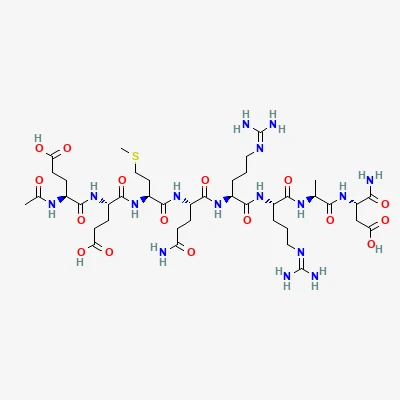
Sequence: EEMQRRAD
N-terminal acetyl group; C-terminal amide (Ac-EEMQRRAD-NH2).
What Is SNAP-8?
SNAP-8 is a synthetic octapeptide, Ac-EEMQRRAD-NH2, used as an anti-wrinkle ingredient in cosmetic formulations under the INCI name acetyl octapeptide-3. Its first six residues are identical to acetyl hexapeptide-3 (Ac-EEMQRR-NH2), and it adds alanine and aspartate before the C-terminal amide.
Peer-reviewed data on SNAP-8 are limited. A PubMed search as of October 2026 found no published mechanistic, cell-culture or animal studies of it as a single agent; the available literature consists of two small clinical studies in which acetyl octapeptide-3 was one component of hyaluronic acid microneedle patches.[1][2] Mechanisms reported for acetyl hexapeptide-3 have not been confirmed for SNAP-8 in these studies and should not be assumed to apply.
Chemical Structure and Molecular Identity
SNAP-8 consists of eight standard L-amino acids, glutamate, glutamate, methionine, glutamine, arginine, arginine, alanine and aspartate, with an acetylated N-terminus and an amidated C-terminus. PubChem (CID 76283482) lists the molecular formula C41H70N16O16S and a molecular weight of 1075.2 g/mol. The CAS number is 868844-74-0.
The sequence contains three acidic residues (two glutamates and an aspartate) and two basic arginines, making it a highly polar, water-soluble peptide. PubChem’s computed partition coefficient (XLogP -7.7) reflects this hydrophilicity.
Names and synonyms
- INCI name: acetyl octapeptide-3
- Other names: acetyl glutamyl octapeptide-3, acetyl glutamyl heptapeptide-3
- Abbreviations: SNAP-8, Ac-EEMQRRAD-NH2
What the Published Literature Covers
The peer-reviewed literature on SNAP-8 consists of two clinical studies of microneedle patches that combined acetyl octapeptide-3 with other active ingredients. Neither study isolated the effect of the peptide.
2020 monocentric study
A 12-week clinical study tested hyaluronic acid microneedle patches containing arginine/lysine polypeptide, acetyl octapeptide-3, palmitoyl tripeptide-5, adenosine and seaweed extracts, applied to the outer eye corners and the volar forearm of healthy subjects with aged skin. The product was well tolerated, with no primary or cumulative skin reactions. Instrumental measurements showed a 25.8% decrease in fine lines and wrinkles, 15.4% higher skin hydration, and 14.2% and 12.9% increases in dermal density and thickness. The authors attributed the results to the combined formulation; the abstract does not describe a placebo group.[1]
2024 placebo-controlled study
A dissolving microneedle patch built on a hyaluronic acid backbone with acetyl octapeptide-3, L-ascorbic acid 2-glucoside and sodium cyclic lysophosphatidic acid was compared with hyaluronic acid-only placebo patches applied to the opposite eye in 24 healthy subjects over 28 days. The active patch produced greater improvement in eye wrinkles, reduced transepidermal water loss, and enhanced skin elasticity and lifting, with no adverse effects reported.[2]
Because both products contained several actives and relied on microneedle delivery, these results describe the patches, not SNAP-8 alone.
Because SNAP-8 differs from acetyl hexapeptide-3 by only two residues, researchers typically confirm its identity and purity with HPLC and mass spectrometry certificates of analysis.
Regulatory and Research Status
SNAP-8 (acetyl octapeptide-3) is a cosmetic ingredient and is not approved by the US Food and Drug Administration as a drug for any indication. Cosmetic ingredients in the United States do not require FDA premarket approval.
As a research compound, SNAP-8 remains largely uncharacterized in the peer-reviewed literature. Open questions include its mechanism of action, how it compares with acetyl hexapeptide-3, how far it penetrates skin from conventional formulations, and what effect it has when tested on its own rather than in combination products.
Commonly Supplied Research Formats
SNAP-8 is listed by 7 of the 11 major U.S. research-peptide suppliers we track. The most commonly listed formats are:
- 10mg
- 200mg
- 9mg
Supplier catalog survey, October 2026. Quantities refer to net peptide per vial as labeled.
Frequently Asked Questions
Is SNAP-8 the same as acetyl octapeptide-3?
Yes. SNAP-8 is the common name for acetyl octapeptide-3, the eight-residue peptide Ac-Glu-Glu-Met-Gln-Arg-Arg-Ala-Asp-NH2. PubChem lists both names under CID 76283482 with CAS number 868844-74-0, along with the synonyms acetyl glutamyl octapeptide-3 and acetyl glutamyl heptapeptide-3. Clinical papers generally use the name acetyl octapeptide-3.
What is the molecular weight of SNAP-8?
PubChem lists SNAP-8 (acetyl octapeptide-3, CID 76283482) with a molecular weight of 1075.2 g/mol and the molecular formula C41H70N16O16S. Its InChIKey is KMACPCJUCHVVGP-FNRPHRCSSA-N. Material supplied as a salt, such as an acetate, has a higher bulk weight than the free peptide.
How is SNAP-8 different from acetyl hexapeptide-3?
SNAP-8 is two residues longer. Acetyl hexapeptide-3 is Ac-EEMQRR-NH2, and SNAP-8 is Ac-EEMQRRAD-NH2, with alanine and aspartate added before the C-terminal amide. Acetyl hexapeptide-3 has a larger body of mechanistic and skin-penetration research, while published data on SNAP-8 are limited to two small clinical studies of multi-ingredient microneedle patches.
What does the research on SNAP-8 show?
Peer-reviewed data are limited. Two small clinical studies tested hyaluronic acid microneedle patches containing acetyl octapeptide-3 with other actives; both reported improvements in eye-area wrinkles and good tolerability, and one used placebo patches for comparison. Because the patches combined several ingredients, neither study shows what SNAP-8 does on its own.
Is SNAP-8 FDA approved?
No. SNAP-8 (acetyl octapeptide-3) is not approved by the FDA as a drug for any condition. It is a cosmetic ingredient, and cosmetic ingredients in the United States are not subject to FDA premarket approval. Its published human data come from two small cosmetic studies of multi-ingredient microneedle patches.
References
- Avcil M, Akman G, Klokkers J, et al. Efficacy of bioactive peptides loaded on hyaluronic acid microneedle patches: A monocentric clinical study. Journal of cosmetic dermatology 2020. PMID 31134751 · DOI
- Shin JY, Han D, Yoon KY, et al. Clinical Safety and Efficacy Evaluation of a Dissolving Microneedle Patch Having Dual Anti-Wrinkle Effects With Safe and Long-Term Activities. Annals of dermatology 2024. PMID 39082657 · DOI
Related Compounds
This profile summarizes chemical data and peer-reviewed literature for educational and laboratory-research reference. It is not medical advice, and nothing here describes or recommends use in humans or animals. How we source and verify data.